Light small locations with portable practical fixtures
A portable lighting approach for small rooms, practical sources and consistent colour on location.
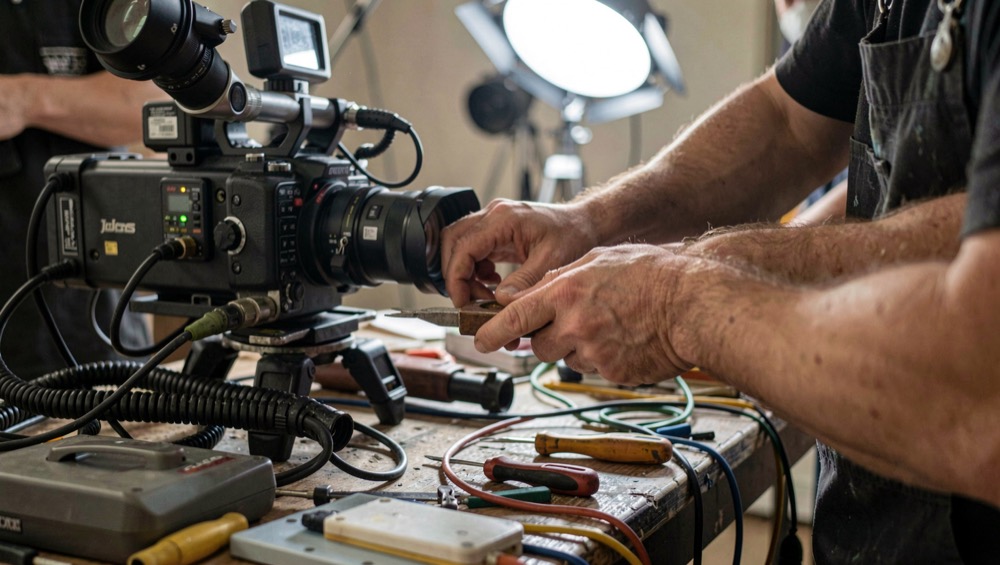
Small rooms reward lighting plans that respect their existing shape. Portable fixtures can add direction and contrast without filling every corner with stands. The work starts by deciding which source belongs to the room and which source is there to guide the viewer.
01
Read the practicals first
Turn on the sources that belong to the location and look at what they already do to faces, walls and depth. This gives the lighting plan a starting language. If the practical is too weak, change its position or add a hidden companion before building a separate look around it.
02
Keep the footprint small
Choose modifiers and stands that can be moved without asking the whole crew to rebuild the room. A soft source close to the subject often gives more control than a larger source far away. Leave clear paths for actors and crew, especially when the camera will move.
03
Check colour at the camera
Colour consistency is easier to protect when it is checked in the image rather than in memory. Compare the practical, the added source and the ambient light in the same frame. Record the choice so a later setup can return to it without starting over.

04
Carry the note into the next day
The value of a production note is its second use. Keep the decision, the reason for it and the signal that would make you change it. That short record gives the next person a way to repeat the useful part without repeating every mistake.